
Key points
- Weight loss is fastest early and usually levels off after about a year.
- A plateau means no change for several weeks, on the prescribed dose.
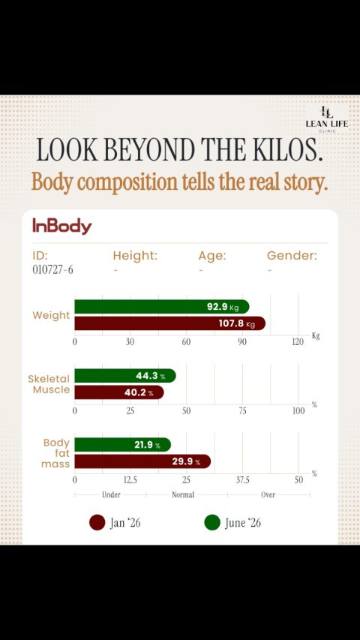
- InBody scans show whether you're still losing fat even when the scale is still.
- Dose, protein, strength training and sleep are the main levers.
Why weight loss slows
Weight loss on GLP-1 medicines is fastest in the first months and then slows. As you get lighter, your body needs less energy, and it adapts to eating less. In the trials, average weight loss levelled off after about a year on treatment. A slowdown is expected, not a sign the medicine has stopped working.
When it's a true plateau
A plateau usually means your weight hasn't changed for several weeks, while you're taking the medicine as prescribed. Check your InBody results too: if you're losing fat and gaining muscle, the scale can stay still while your body changes.
What your care team may change
- Dose: if you're below the maximum dose and coping well, your doctor may increase it.
- Protein and portions: as appetite returns, portions can creep up. A dietitian review helps.
- Strength training: more muscle supports your metabolism.
- Sleep, stress and other medicines: all can slow weight loss and are worth reviewing.
- Your goal: sometimes a plateau is a healthy weight for you to maintain.
What not to do
- Don't increase your dose yourself.
- Don't cut food drastically: it costs muscle and makes regain more likely.
- Don't stop the medicine in frustration without a plan.
Questions
Should I increase my dose?
Only your doctor should decide. If you're below the maximum dose and coping well, it may be an option.
Is a plateau a sign the medicine has stopped working?
Usually not. The medicine keeps appetite down and helps you maintain the weight lost, even when loss slows.